

For many people, accumulated wealth represents far more than just a financial figure. It reflects years of dedication, careful saving, and personal sacrifice — all aimed at securing a comfortable retirement, providing for loved ones, and leaving a meaningful legacy. Yet one of the most critical questions in financial planning is often left unaddressed: not how to grow or spend wealth, but how to pass it on in an efficient and purposeful manner. Answering this question requires thoughtful estate planning that spans a wide range of financial topics, from tax considerations and personal goals to the concept of legacy.
Despite the clear importance of this planning, a 2025 survey found that fewer than one in three Americans report having a will, and more than half say they have no estate plan at all.1 This disconnect between intention and action carries real consequences. Without a well-structured plan, wealth that took decades to build can be diminished by taxes, legal complications, and unintended distributions. Advanced estate planning can address this challenge by establishing a coordinated framework designed to maximize the efficient transfer of assets to the people and causes that matter most to you.
At its core, estate planning serves two broad purposes. The first involves non-financial goals, such as providing for dependents, protecting assets from creditors, and ensuring that assets reach the right people in the right manner. The second involves financial goals, including managing tax obligations, maintaining liquidity, and preserving the value of business interests. The most effective plans weave both types of goals together and treat wealth transfer as an ongoing, long-term process as opposed to a one-time tactic.
Building the Right Foundation for Transferring Wealth
 |
Before examining specific strategies, it is helpful to understand the core decisions that shape every estate plan. These center on three fundamental questions: (1.) What assets are being transferred, (2.) to whom will they go, and (3.) when will the transfer take place?
The nature of the assets being transferred is an important starting point, as it influences which strategies are most appropriate. Liquid assets (i.e., cash and publicly traded securities, including typical stocks and bonds) are the most straightforward to transfer. Real estate, closely held business interests, and alternative investments introduce added complexity because they are more difficult to value and may be challenging to divide among multiple beneficiaries.
Every estate plan also requires a clear picture of who will benefit from the transferred assets. Beneficiaries may include a spouse, children, grandchildren, other relatives, close friends, or charitable organizations. Each beneficiary type may call for different planning strategies, particularly when balancing the needs of a surviving spouse against the longer-term interests of children or future generations. Identifying beneficiaries early in the planning process helps ensure that the right assets reach the right people in the most effective manner.
The timing of transfers is another key consideration. Some assets pass directly to beneficiaries upon death, while others may be distributed strategically over time. By making “completed gifts” during one’s lifetime, for example, a donor can take advantage of annual gift exclusions to increase the total amount of tax-free transfers.
In 2026, the annual gift exclusion is $19,000 per recipient, meaning a donor can transfer property up to that amount to any one individual, or $38,000 if splitting the gift with their spouse, without incurring taxes.2 Over time, this approach can remove a meaningful portion of taxable estate value and allows for greater intentionality over how and when beneficiaries receive their inheritance.
Transfer Strategies Aligned With Specific Goals
With these foundational elements in place, the next step is identifying the goals that estate planning can address and matching them to the available options.
The following are a few hypothetical examples for illustrative purposes. Keep in mind any advanced strategy should be discussed and coordinated with a qualified estate planning attorney and an experienced financial advisor.
Example 1: Reducing the Taxable Value of the Gross Estate
- Individuals seeking to minimize estate taxes while transferring future appreciation to the next generation may use irrevocable trusts to reduce the value of their gross estate and provide distributions to beneficiaries.
- A common example is a Grantor-Retained Annuity Trust, or GRAT, in which the grantor transfers assets into the trust and receives annuity payments over a defined term.
- If the grantor survives the trust term, the remaining assets pass to beneficiaries outside of the taxable estate, though careful attention must be paid as gift taxation can apply.
Example 2: Achieving Philanthropic Goals
- For families with philanthropic objectives, a Charitable Remainder Trust, or CRT, can be another option for reducing estate value.
- This structure allows the grantor to designate beneficiaries to receive the income interest for a set term, with the remainder going to a designated charity. In addition to removing assets from the gross estate, this approach provides a gift tax and income tax deduction for the charitable remainder interest.
- CRTs may work particularly well with highly appreciated assets that may generate capital gains tax, such as real estate or concentrated stock positions. Within the trust, the proceeds are reinvested in a diversified portfolio, and the beneficiary receives an income stream for life or a specified term. This converts a low-yield, high-gain asset into a tax-advantaged income stream while fulfilling philanthropic goals.
Example 3: Managing Business Interests
- For families with business interests or other illiquid assets, additional planning around liquidity, governance, and continuity is essential.
- Buy-sell agreements specify how ownership transfers if an owner passes away or becomes incapacitated, helping to prevent disputes and ensuring the business can continue operating without disruption.
- Key-person life insurance can provide liquidity to cover ongoing business operations or fund a buyout without requiring a forced sale of the business.
- Family Limited Partnerships, or FLPs, can allow senior family members to create different classes of ownership and transfer ownership interests to the next generation while retaining control as the general partner. Because limited partnership interests lack control and marketability, they may qualify for valuation discounts, allowing families to transfer more value within the gift and estate tax exemption limits. Asset protection is an additional benefit, shielding family members from the claims of outside creditors. This structure is especially valuable in the context of a family business, where continuity of management is as important as tax efficiency.
Estate Planning as an Ongoing and Evolving Process
 |
Like all aspects of financial planning, estate planning is a lifelong endeavor that requires regular monitoring and adjustment as personal circumstances and fiscal policies evolve.
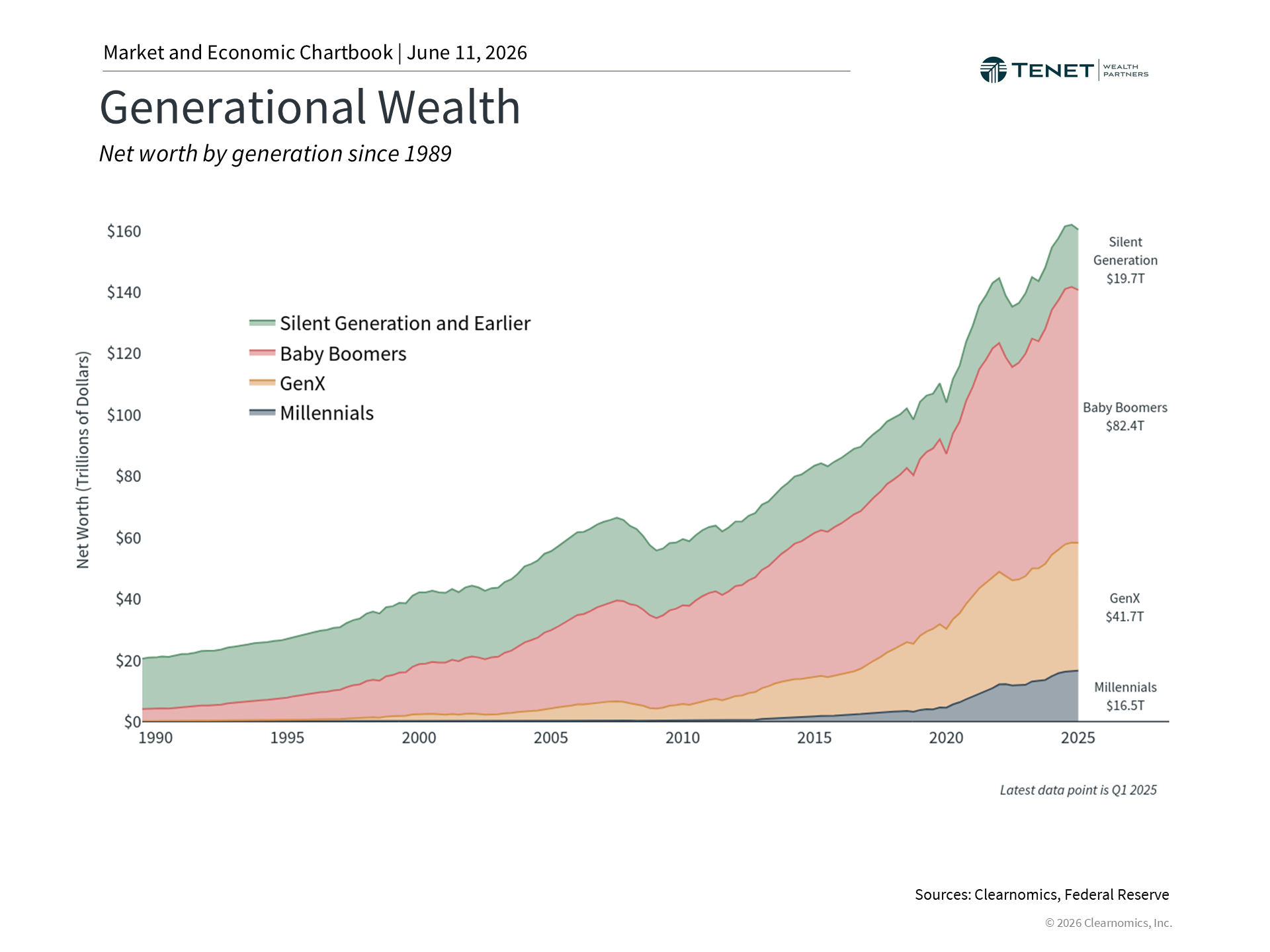
Family growth is a common example of how personal circumstances can shift over time. An estate plan designed for a young family will naturally need to be revisited as that family expands and matures. When multiple future generations are involved, the complexity of wealth transfers to those beneficiaries also increases.
The Generation-Skipping Transfer Tax (GSTT) becomes particularly relevant in these situations. It was implemented to ensure that transfers are taxed at each generational level and therefore applies to transfers made to recipients who are two or more generations younger than the donor. With careful planning, a donor can reduce or avoid this additional transfer tax through a variety of transfer techniques.
Policy changes can also reshape outcomes significantly over time. Federal estate and gift tax exemptions have shifted considerably across administrations, ranging from as low as $675,000 in 2001 to a high of $15 million per individual today.3 The 2017 Tax Cuts and Jobs Act doubled the exemption, and the One Big Beautiful Bill made these higher thresholds permanent.
State-level rules introduce yet another layer of complexity, as some states impose their own estate or inheritance taxes with exemption thresholds that differ from the federal level. Residency and domicile decisions can therefore carry meaningful financial consequences for certain families. Staying current on policy changes that affect the estate tax calculation is an important part of maintaining an effective plan.
All of these strategies work best when they are coordinated with one another and integrated with broader lifetime gifting and philanthropic objectives. As with all areas of financial planning, beginning the process as early as possible and continuously refining the plan to reflect evolving goals are the keys to long-term success.
Overall, estate planning requires a coordinated, disciplined, and thoughtful approach designed to preserve wealth, reduce taxes, and ensure that assets reach the right people, in the right way, at the right time. Our team of fiduciary financial advisors at Tenet Wealth Partners has the experience and expertise with advanced estate planning to help craft strategies aligned with your wishes. We work closely with your estate attorney as well as your CPA to ensure the plan is collaborative and supported by a professional team. Reach out to us to learn more about how advanced planning may be beneficial for your specific situation.
Preserve More of What You’ve Built
Advanced estate planning can help families transfer wealth with greater intention, coordination, and tax efficiency. Connect with our team to discuss how your estate plan fits into your broader financial goals.
No pressure. Just a conversation about your estate plan and long-term goals.

References
- https://www.caring.com/resources/wills-survey
- https://www.irs.gov/businesses/small-businesses-self-employed/whats-new-estate-and-gift-tax
- https://www.irs.gov/newsroom/irs-releases-tax-inflation-adjustments-for-tax-year-2026-including-amendments-from-the-one-big-beautiful-bill
Investment advisory services offered through Tenet Wealth Partners, LLC, a registered investment advisor with the U.S. Securities and Exchange Commission. This material is intended for informational purposes only. It should not be construed as legal or tax advice and is not intended to replace the advice of a qualified attorney or tax advisor. This information is not an offer or a solicitation to buy or sell securities. The information contained may have been compiled from third-party sources and is believed to be reliable.
The information provided in this communication was sourced by Tenet Wealth Partners through public information and public channels and is in no way proprietary to Tenet Wealth Partners, nor is the information provided Tenet Wealth Partner’s position, recommendation or investment advice. Certain statements contained herein may constitute forward-looking statements, which are based on current expectations and subject to change.
This material is provided for informational/educational purposes only. This material is not intended to constitute legal, tax, investment or financial advice. Investments are subject to risk, including but not limited to market and interest rate fluctuations.
Any performance data represents past performance which is no guarantee of future results. Prices/yields/figures mentioned herein are as of the date noted unless indicated otherwise. All figures subject to market fluctuation and change. Additional information available upon request. Index performance is presented for illustrative purposes only and does not represent the performance of any specific investment product or portfolio. An investment cannot be made directly into an index.
About The Author
Kyle Wetters, CFP®Co-Founder & Managing Partner
Kyle Wetters co-founded Tenet Wealth Partners in 2021, intent on putting his client’s interests above all else. As a CERTIFIED FINANCIAL PLANNER® practitioner, with over 20 years of experience in the financial industry, he specializes in retirement planning for his clients. Kyle listens to his customers’ goals and values to develop long-term strategic plans to […]
Learn more about Kyle