

For many grandparents, helping with a grandchild’s education is about more than tuition. It is a chance to support someone you love as they take the next step toward independence. Recent changes to federal financial aid rules have also prompted families to take another look at grandparent-owned 529 accounts.
That generosity raises practical questions. How much can you comfortably contribute? Who should control the account? What happens if your grandchild receives a scholarship or chooses a different path?
A grandparent-owned 529 education savings account may help with some of these questions. The right starting point, though, is your own financial picture. Supporting a grandchild should be weighed alongside the resources you need for your own retirement.
At a Glance
- Withdrawals from grandparent-owned 529 accounts are no longer counted as student income on the FAFSA, which removes a past drawback.
- The account owner keeps control of when money is distributed and may be able to change the beneficiary.
- 529 contribution limits and federal gift-tax rules are separate, and both are worth reviewing before you give.
- Your retirement needs belong in the conversation from the start.
Start With What You Want to Help Cover
College costs go well beyond the tuition bill. According to the College Board, housing, food, books, transportation and other education-related expenses now average over $17,000 a year.1 Tuition and fees have also outpaced inflation over the past 40 years, particularly at private four-year institutions, based on data from the National Center for Education Statistics.
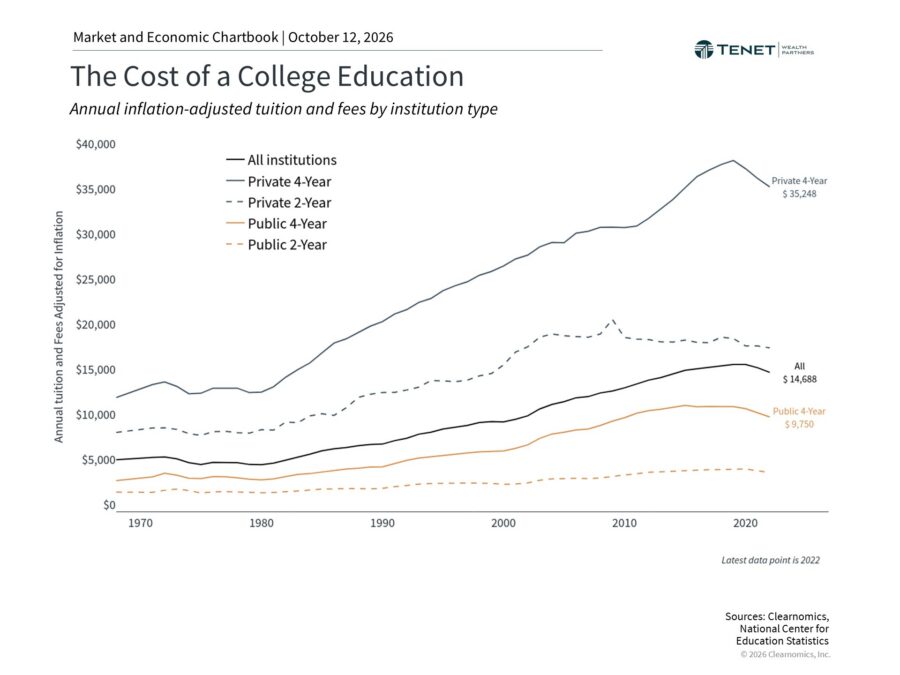
For grandparents hoping to help, that makes the purpose of the gift an important first step. You may want to contribute toward tuition, cover part of the living expenses, or build an account that can grow over time. You do not need to fund the entire education for your gift to matter.
Most families combine several resources: parents’ income and savings, student earnings, scholarships and grants, loans, and support from relatives. Understanding where your contribution fits can help the family plan together, and it gives you a clearer basis for deciding how much to set aside without stretching your own finances.
Why Grandparent Ownership Is Worth Another Look
Parents often open 529 accounts for their children, but grandparents can open one for a grandchild as well.
Earnings in a 529 account grow free of federal income tax, and withdrawals are federally tax-free when used for qualified education expenses. Contributions are not deductible for federal income tax purposes.6
In the past, that came with a financial aid complication. Withdrawals used to pay a grandchild’s college expenses were reported as student income on the Free Application for Federal Student Aid, known as the FAFSA.2 Student income counted toward the Student Aid Index, the figure schools use to estimate a family’s aid eligibility, at a rate of 50%.3
Under the updated federal rules, grandparent-owned 529 accounts are no longer treated that way. For families, the practical change is that a grandparent can help through a 529 account without the earlier FAFSA treatment working against that support.
This does not mean any particular student will qualify for aid. It means one factor that used to complicate the decision has changed. Families should still review the rules that apply to their student before deciding how to coordinate education funding.
A Lasting Legacy, With Realistic Expectations
Education is one way grandparents leave a legacy that outlasts a traditional gift. Bureau of Labor Statistics data show that average earnings rise with each level of education and unemployment rates tend to fall. For example, the jobless rate is 4.3% for workers with a high school diploma, 2.8% for those with a bachelor’s degree, and under 2% for those with a professional degree or doctorate.4
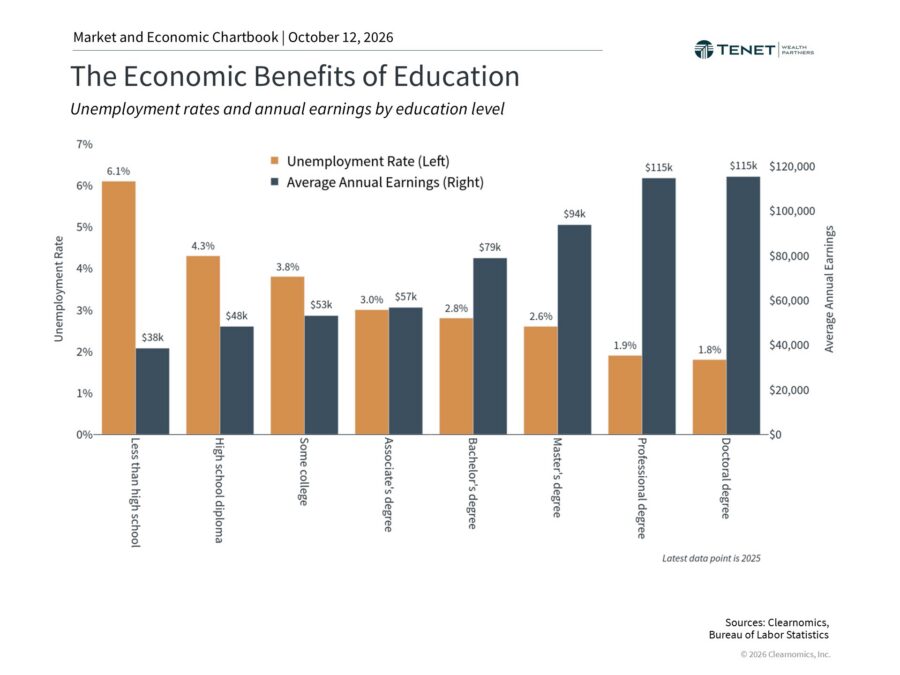
Those are national averages. They describe groups of people, not what any one student should expect.
The Account Owner Keeps Control as Plans Change
A grandparent-owned 529 account lets the grandparent keep control of the assets, including when distributions are made. That can matter if you want to set money aside for education while staying involved in how it is used.
It also provides flexibility when a grandchild’s plans change. A student might receive a scholarship, choose a less expensive school, or decide not to continue college. Depending on the plan’s rules, the account owner may be able to name another qualifying family member as beneficiary, or even the owner.
There are also possible uses for money that remains in the account:
- A Roth IRA rollover. Under the SECURE 2.0 Act, up to $35,000 over the beneficiary’s lifetime may be moved from a 529 account into the beneficiary’s Roth IRA without tax or penalty, if certain conditions are met. These include having had the account open for at least 15 years, along with annual Roth IRA contribution limits and earned-income requirements.5 Contributions made within the preceding five years, and their associated earnings, are not eligible for rollover.6 It is a conditional option, not an automatic transfer of the remaining balance.
- Student loan repayment. Up to $10,000 per individual over their lifetime may be used to repay qualified federal or private student loans, which can include loans of the beneficiary or the beneficiary’s siblings, subject to applicable limits.6
Beginning in 2026, 529 funds may also be used for up to $20,000 in qualified K–12 education expenses per beneficiary each year, across all of that beneficiary’s 529 accounts, free of federal income tax. Eligible expenses now extend beyond tuition to include certain curriculum materials, books, tutoring, testing fees, and educational therapies for students with disabilities. State tax treatment may differ.6
These options can make education savings more adaptable, but they do not replace understanding the rules before changing a beneficiary or moving money.
Contribution Limits and Gift-Tax Rules Are Two Different Things
529 plans do not have an annual contribution cap, though each state sets an aggregate lifetime limit. Separately, the amount you give can affect federal gift-tax reporting.
For 2026, an individual can give up to $19,000 per grandchild without triggering federal gift-tax reporting.7 Whether a gift fits within that amount depends on your other gifts to the same grandchild during the year.
If you want to give more, a special election lets you front-load up to five years of gifts into a single contribution, which comes to $95,000 at the 2026 amount.8 Giving earlier gives the money more time to stay invested. It does not guarantee growth or any particular education-funding outcome.
A larger contribution deserves careful coordination with your tax professional. The election, the reporting requirements, and any other gifts made during the period should all be reviewed before money moves.
State Tax Benefits May Influence the Decision
More than 30 states offer an income tax deduction or credit for certain 529 contributions.9 In most cases the benefit is tied to using your home state’s plan, while some states extend it to contributions made to any state’s plan.
Whether you benefit depends on where you live, which plan you use, and whether your contribution meets your state’s requirements. A tax benefit can be helpful, but it should be weighed alongside the account’s purpose and your broader financial needs rather than assumed.
Keep Your Retirement in the Conversation
Helping a grandchild can be deeply rewarding, and it can be easy to focus on what you would like to give before considering what you can comfortably afford. Before committing to a contribution, you might ask:
- How would this gift affect the resources available for my retirement?
- What amount fits comfortably within my cash flow and long-term plan?
- How will it work alongside the parents’ education savings?
- Who should own the account and coordinate distributions?
- What would we want to do if my grandchild’s education plans change?
These questions connect the education goal to the rest of your financial life, and they can help the family set shared expectations before contributions begin.
Make Education Giving Part of Your Broader Plan
Funding a grandchild’s education can be a meaningful expression of the legacy you want to leave. The decision involves more than choosing an account. It includes deciding how much you want to give, coordinating with the family, understanding the tax and financial aid considerations, and protecting your own long-term needs.
If you are considering helping with education costs, we can talk through how that goal fits within your financial plan and which questions to review with your tax professional.
Schedule Your Consultation. No pressure. Just a conversation about your financial plan.
References
- College Board, Trends in College Pricing and Student Aid 2025: research.collegeboard.org/media/pdf/Trends-in-College-Pricing-and-Student-Aid-2025-final_1.pdf
- Congressional Research Service, R46909: congress.gov/crs-product/R46909
- Congressional Research Service, R48835: congress.gov/crs-product/R48835
- Bureau of Labor Statistics, Employment Projections: bls.gov/emp/
- Congressional Research Service, R42807: congress.gov/crs_external_products/R/HTML/R42807.html
- IRS Tax Topic 313: irs.gov/taxtopics/tc313
- IRS, Gifts and Inheritances FAQ: irs.gov/faqs/interest-dividends-other-types-of-income/gifts-inheritances/gifts-inheritances-1
- IRS, About Form 709: irs.gov/forms-pubs/about-form-709
- IRS, Tax Benefits for Education Information Center: irs.gov/newsroom/tax-benefits-for-education-information-center
Make Education Giving Part of Your Legacy Plan
Helping a grandchild pay for college can be a meaningful gift. A planning conversation can help you weigh how much to give, how to structure it, and how it fits alongside your own retirement needs.
Talk Through Education Planning
No pressure. Just a conversation about your financial plan.

Investment advisory services offered through Tenet Wealth Partners, LLC, a registered investment advisor with the U.S. Securities and Exchange Commission. This material is intended for informational purposes only. It should not be construed as legal or tax advice and is not intended to replace the advice of a qualified attorney or tax advisor. This information is not an offer or a solicitation to buy or sell securities. The information contained may have been compiled from third-party sources and is believed to be reliable.
The information provided in this communication was sourced by Tenet Wealth Partners through public information and public channels and is in no way proprietary to Tenet Wealth Partners, nor is the information provided Tenet Wealth Partner’s position, recommendation or investment advice.
This material is provided for informational/educational purposes only. This material is not intended to constitute legal, tax, investment or financial advice. Investments are subject to risk, including but not limited to market and interest rate fluctuations.
Any performance data represents past performance which is no guarantee of future results. Prices/yields/figures mentioned herein are as of the date noted unless indicated otherwise. All figures subject to market fluctuation and change. Additional information available upon request.
About The Author
Kyle Wetters, CFP®Co-Founder & Managing Partner
Kyle Wetters co-founded Tenet Wealth Partners in 2021, intent on putting his client’s interests above all else. As a CERTIFIED FINANCIAL PLANNER® practitioner, with over 20 years of experience in the financial industry, he specializes in retirement planning for his clients. Kyle listens to his customers’ goals and values to develop long-term strategic plans to […]
Learn more about Kyle