The state of the economy is vital for long-term investors to consider as it directly influences portfolios and financial plans. Recent economic data has delivered mixed signals, leaving many investors uncertain about how to interpret the current landscape.
Much like a doctor who relies on multiple health indicators rather than a single measurement to assess a patient’s health, investors are best served by looking at a range of data points rather than just one or two reports. Blood pressure, heart rate, and other metrics each tell part of the story, and what constitutes “healthy” can differ from person to person. In the same way, payrolls, inflation, and GDP are all vital economic signs that together paint a complete picture. These indicators shift throughout the business cycle, and a variety of environments can still support portfolios and long-term financial goals.
Today’s headline figures are broadly encouraging: GDP growth has mostly exceeded expectations, inflation continues to slow, and unemployment remains low by historical standards. That said, the labor market tells a more nuanced story. While the most recent monthly data was positive, hiring throughout the past year was significantly weaker than initially reported. For long-term investors, the key is to understand how these data points fit together to form a broader picture when looking ahead, rather than reacting to any single release.
The labor market is at an inflection point
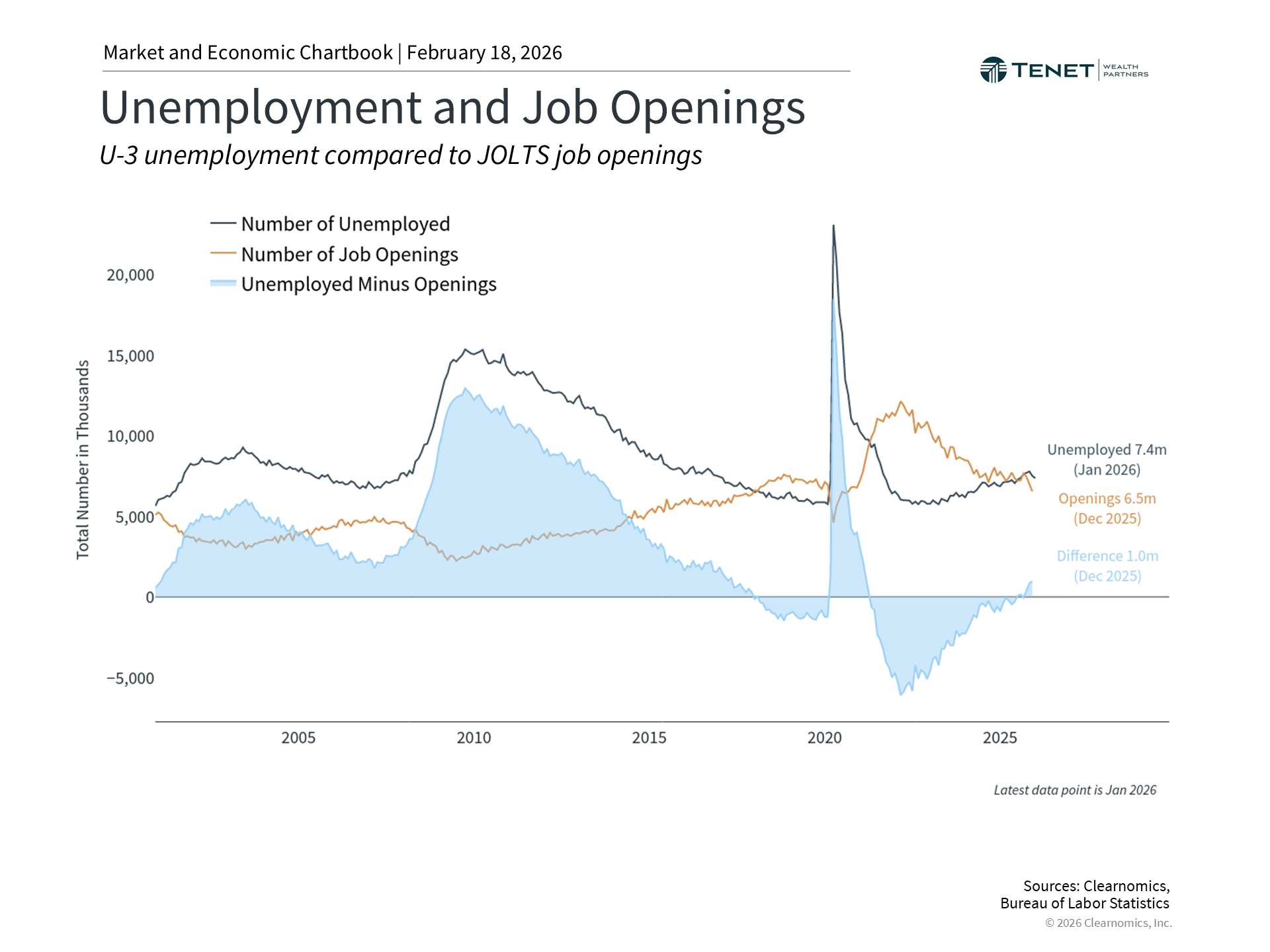 |
Interpreting labor market conditions has been particularly difficult over recent months due to factors such as government shutdowns that delayed data releases, adverse weather, and other disruptions. For individuals, perhaps the most notable development is the shift in the balance between job seekers and available job openings.
As illustrated in the chart above, the post-pandemic period was characterized by several years in which job openings outnumbered unemployed individuals. This ratio remained above one from mid-2021 through last summer, peaking at approximately two positions per job seeker in 2022. Today, approximately 7.4 million Americans are unemployed while only 6.5 million positions remain unfilled—the lowest number of open roles since late 2020.
Despite this backdrop, the January jobs report provided an encouraging signal, showing the economy added 130,000 jobs that month—nearly double what economists had forecast. Much of this growth was concentrated in health care, social assistance, and construction. The unemployment rate also edged down to 4.3% from 4.4%, remaining near historically low levels. On its own, this could suggest the labor market is regaining momentum.
While these numbers are encouraging, the broader trend has been more challenging. The Bureau of Labor Statistics released its annual revisions, which draw on more precise data than was available at the time of each monthly report. These revisions revealed that only 181,000 jobs were created over 2025, or roughly 15,000 per month—the weakest annual total since 2020. For context, healthy job creation typically runs into the millions per year prior to such revisions.
Why has the overall unemployment rate stayed relatively low despite slower hiring? Part of the explanation lies in demographics and immigration trends. The Census Bureau recently reported a historic decline in net international migration, which fell from a peak of approximately 2.7 million in 2024 to about 1.3 million in 2025, with further declines anticipated. Additionally, an aging population and lower labor force participation mean fewer new workers are entering the job market. In other words, both the supply and demand sides of the labor market are moderating simultaneously, which has helped prevent the unemployment rate from rising more sharply.
Jobs, inflation, and the broader economy
 |
Investors tend to monitor the labor market closely because it is more tangible than many other economic indicators. Jobs have a direct impact on household income, consumer confidence, and spending behavior. Given that consumer spending accounts for more than two-thirds of U.S. GDP, developments in the labor market inevitably ripple through to the broader economy.
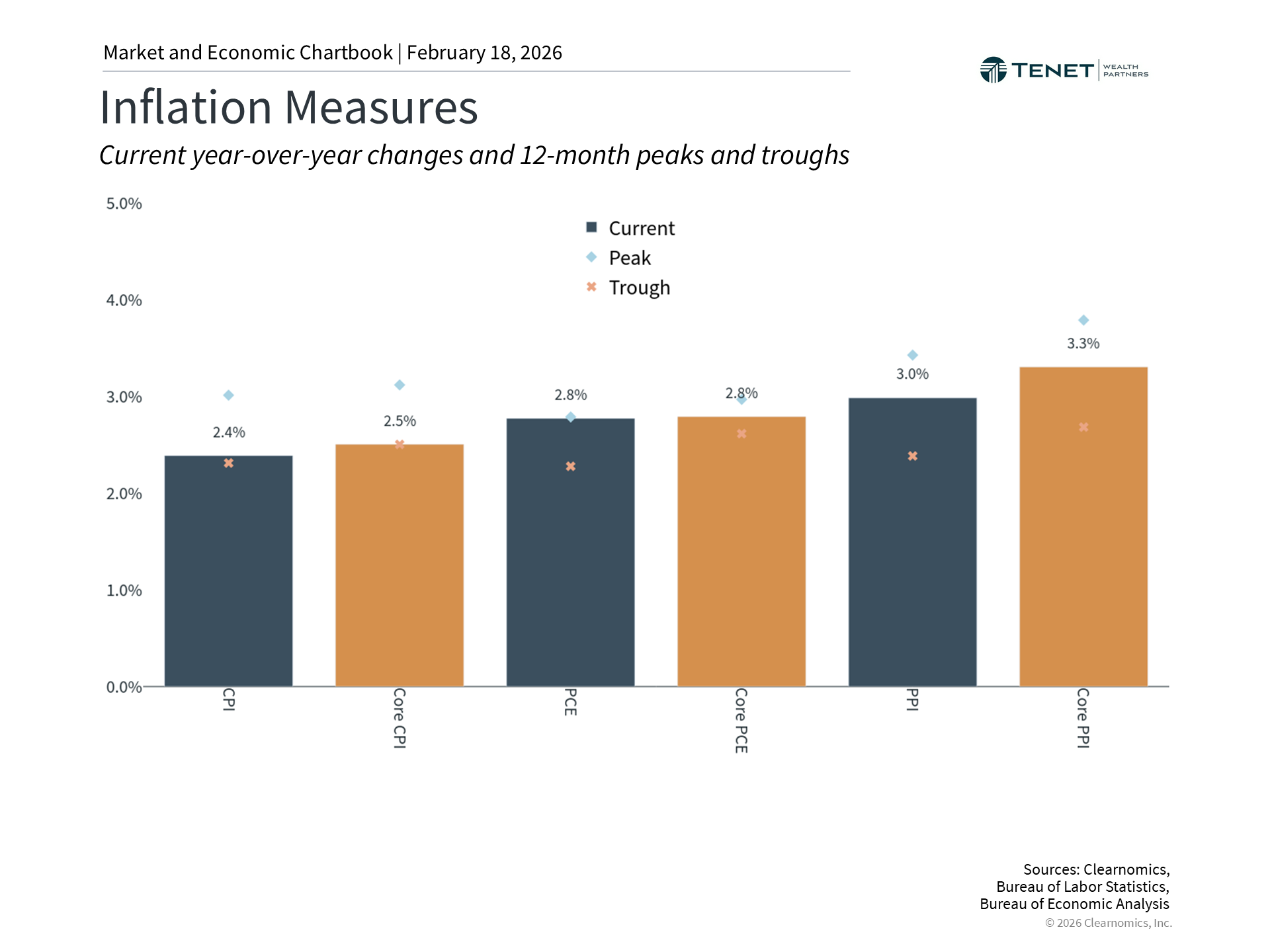
However, employment is only one piece of the puzzle. Other indicators, particularly inflation data, suggest reasons for optimism. Until recently, inflation represented the most significant challenge for both investors and policymakers. The latest figures show that the Consumer Price Index rose just 2.4% over the past year, while core inflation—which strips out food and energy prices—slowed to 2.5%, its lowest level in nearly five years. One measure of “supercore” inflation, which also excludes shelter, rose only 2.1% over the past twelve months.
This consistent deceleration moves the Fed closer to its 2% target and indicates that inflationary pressures are continuing to ease. Of course, elevated price levels remain a burden for many households and retirees, since slower inflation does not mean prices will actually decline. Nevertheless, the containment of price pressures is a positive development for both the economy and portfolios, as inflation can weigh on both stocks and bonds.
What the economic picture means for portfolios
 |
For portfolios, the current economic environment can be viewed as cautiously constructive. The combination of steady growth, moderating inflation, and a softening labor market can potentially give rise to a “Goldilocks” scenario—one that is neither too hot nor too cold. This type of environment can benefit both stocks and bonds, particularly if it helps keep interest rates subdued. Markets have responded positively to the latest employment and inflation data, with interest rates declining across the yield curve and the 10-year Treasury yield hovering just above 4%.
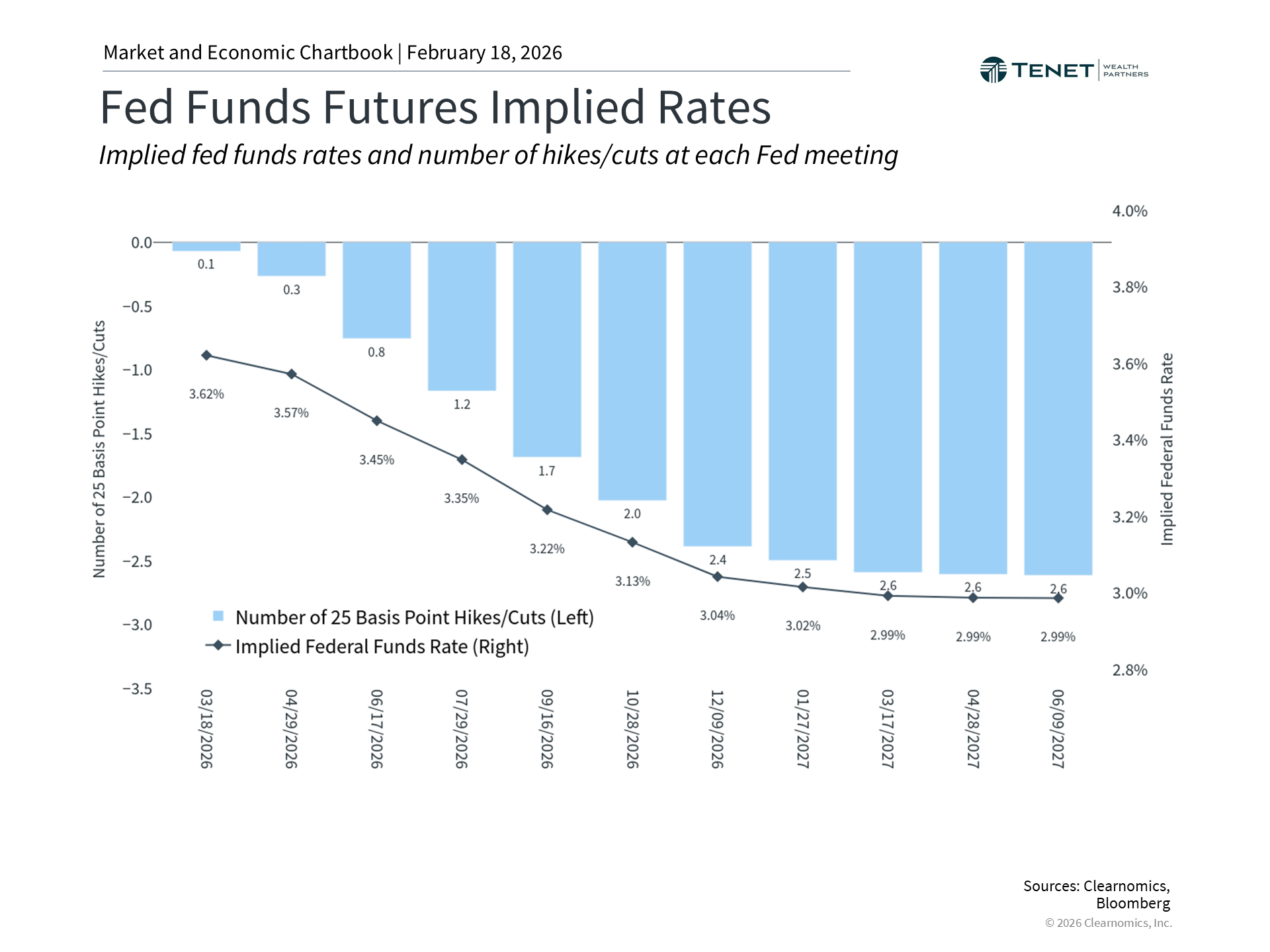
These reports also influence Federal Reserve expectations and raise the likelihood of policy rate cuts later this year. At present, market-based measures imply at least two rate cuts this year, and the prospect of a new Fed chair appointed by President Trump adds further weight to this possibility.
If rates continue to decline, portfolios stand to benefit as lower borrowing costs support businesses and make future corporate earnings more valuable in present-day terms. Existing bond values also tend to appreciate when interest rates fall given their inverse relationship. Even if rates remain stable, bonds continue to offer attractive yields and can serve as a buffer for long-term investors. Meanwhile, corporate earnings continue to expand—one of the primary drivers supporting the broader market over the past year.
The bottom line? The labor market is cooling but the broader economy is healthy. For investors, this mixed backdrop supports a balanced approach and reinforces the importance of long-term thinking when it comes to portfolios and financial plans.

Investment advisory services offered through Tenet Wealth Partners, LLC, a registered investment advisor with the U.S. Securities and Exchange Commission. This material is intended for informational purposes only. It should not be construed as legal or tax advice and is not intended to replace the advice of a qualified attorney or tax advisor. This information is not an offer or a solicitation to buy or sell securities. The information contained may have been compiled from third-party sources and is believed to be reliable.
The information provided in this communication was sourced by Tenet Wealth Partners through public information and public channels and is in no way proprietary to Tenet Wealth Partners, nor is the information provided Tenet Wealth Partner’s position, recommendation or investment advice.
This material is provided for informational/educational purposes only. This material is not intended to constitute legal, tax, investment or financial advice. Investments are subject to risk, including but not limited to market and interest rate fluctuations.
Any performance data represents past performance which is no guarantee of future results. Prices/yields/figures mentioned herein are as of the date noted unless indicated otherwise. All figures subject to market fluctuation and change. Additional information available upon request.
About The Author
Kevan Melchiorre, CFP®Co-Founder & Managing Partner
Kevan Melchiorre co-founded Tenet Wealth Partners in 2021 with a focus on delivering a premier client experience, supported by an innovative and fully integrated approach to wealth planning. As a CERTIFIED FINANCIAL PLANNER® practitioner with over 16 years of wealth management experience, Kevan partners with affluent individuals, families, and institutions to help align their capital […]
Learn more about Kevan