

For most retirees, healthcare represents the single largest and least predictable expense in retirement, potentially totaling hundreds of thousands of dollars over time. While healthcare funding can come from a variety of sources, Medicare stands out as a central element of retirement financial planning. Despite its significance, many Americans find Medicare’s rules and structure difficult to navigate.
Gaining a clear understanding of how Medicare operates, the decisions it requires, and how those decisions interact with a broader financial plan is critical for retirees and those nearing retirement. Making well-informed choices in consultation with appropriate professionals may help safeguard savings, optimize health coverage, and manage cash flow over what could be a long retirement timeframe.
The growing importance of Medicare in retirement planning
Medicare was enacted and signed into law by President Lyndon B. Johnson on July 30, 1965. The program originally included Part A (Hospital Insurance) and Part B (Medical Insurance), collectively referred to as Original Medicare. Over the years, Congress expanded the program to serve more Americans and offer broader benefits, including prescription drug coverage. Today, Medicare provides health coverage to more than 68 million Americans, including approximately 61 million individuals aged 65 and older and around 7 million younger people living with disabilities.1
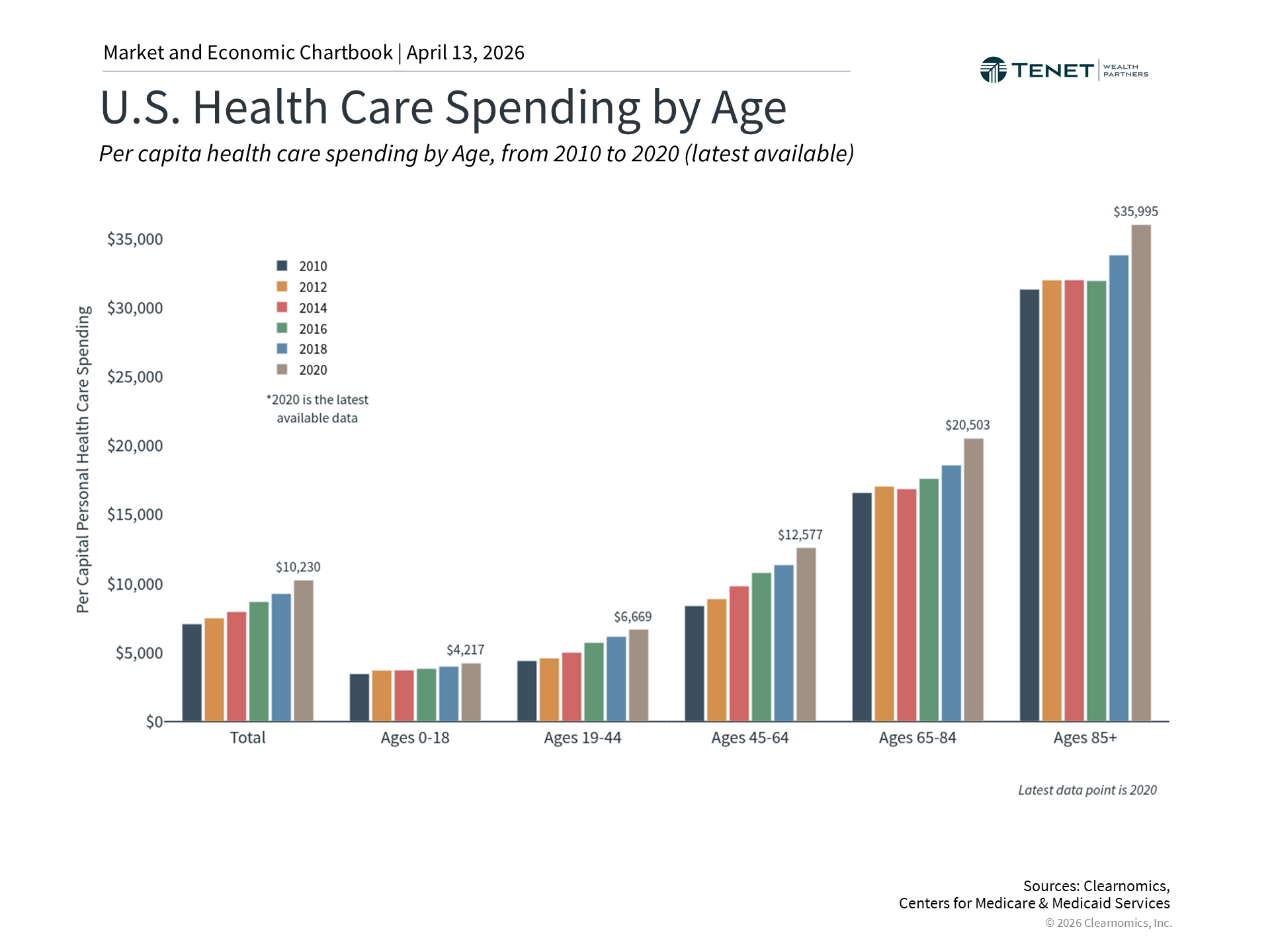
The program’s relevance has grown alongside steadily rising healthcare costs. According to the Centers for Medicare and Medicaid Services, national health expenditures in 2024 reached approximately $15,474 per person, representing 18% of GDP. Over the coming decade, healthcare spending is projected to grow faster than the broader economy. For retirees who often rely on fixed incomes, Medicare offers vital financial protection against these escalating costs.
The program is currently organized into four parts:
- Part A covers inpatient hospital stays, skilled nursing, and hospice care, and is typically available without a premium for those with at least ten years of work history.
- Part B covers physicians’ services, outpatient care, and preventive services, and requires a monthly premium that may increase based on income.
- Part C, known as Medicare Advantage, is offered through private insurers as an alternative to Original Medicare and often bundles additional benefits such as dental, vision, and hearing coverage.
- Part D provides optional prescription drug coverage through private insurers and is also subject to income-based surcharges.
A widespread misconception is that Medicare is entirely free because individuals have paid into the system through payroll deductions over their working years. While Part A is indeed premium-free for most enrollees, Part B premiums, supplemental coverage, and out-of-pocket expenses can accumulate substantially. Depending on your income level, Part B premium amounts may fluctuate year-to-year as well. This reality underscores why Medicare decisions should be integrated into a comprehensive financial plan.
The Medicare income cliff: Why IRMAA planning matters
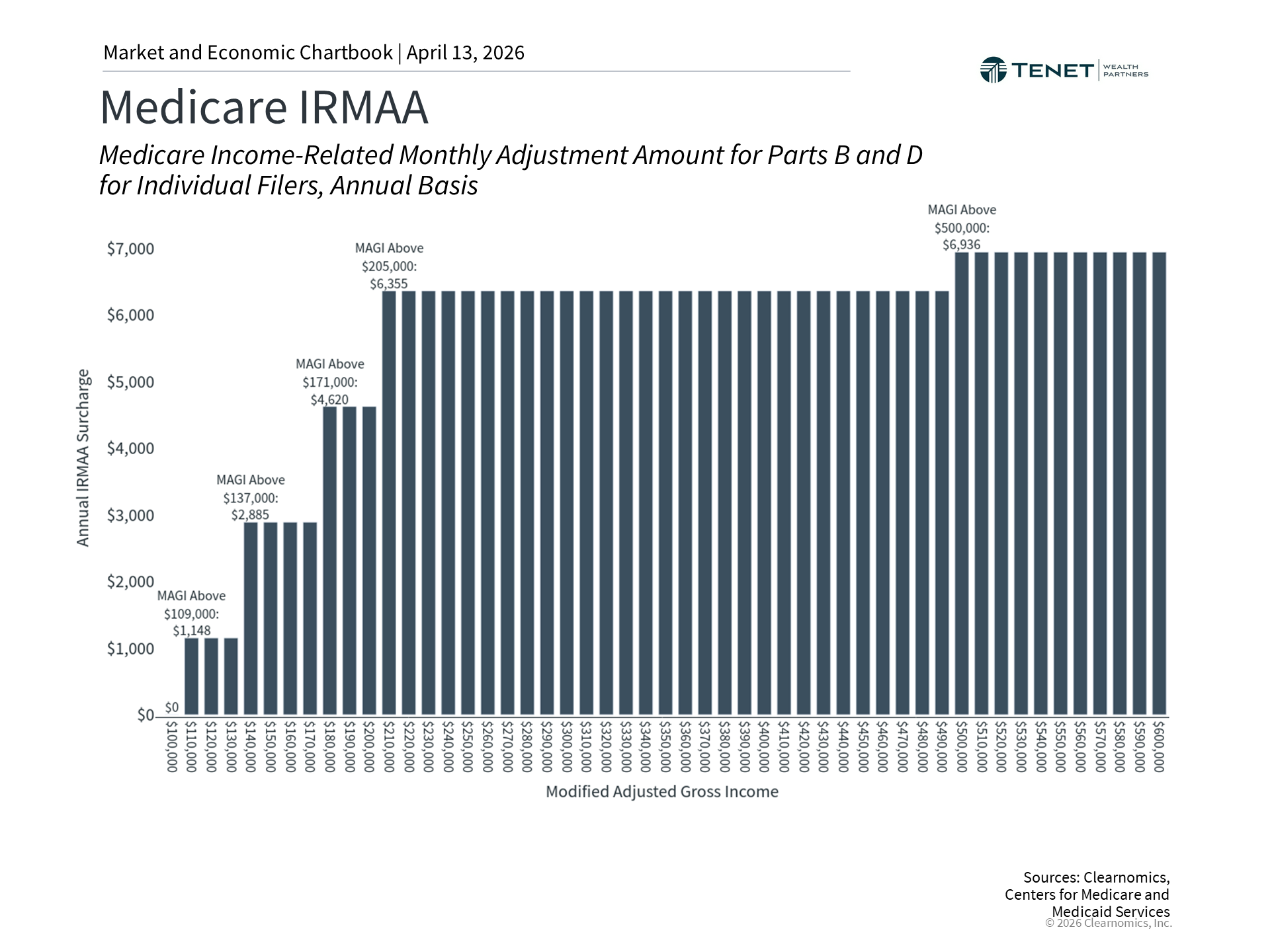 |
One of the most unexpected Medicare-related surprises for retirees involves IRMAA — an additional charge applied to Medicare premiums for individuals earning more than $109,000 or married couples filing jointly with income above $218,000. These figures apply to coverage year 2026 and are adjusted annually.
IRMAA stands for Income-Related Monthly Adjustment Amount and affects both Medicare Part B and Part D premiums. Unlike the marginal tax brackets that most people are familiar with — where only income above a given threshold is taxed at a higher rate — IRMAA works as a cliff. Exceeding a threshold by even a single dollar results in the full surcharge for that entire bracket being applied. This can catch even well-prepared retirees off guard when their income unexpectedly rises.
Adding to the complexity, IRMAA surcharges are calculated each year based on Modified Adjusted Gross Income (MAGI) from two years prior, reflecting the most recent available tax filing. For example, the surcharge faced at age 65 is determined by income from the calendar year you turned 63. This two-year lookback means that financial decisions made well before Medicare enrollment — such as Roth conversions, capital gains realizations, or the timing of Social Security benefits — can carry meaningful consequences.
It is also worth noting that income thresholds for IRMAA differ from those used in IRS marginal tax brackets. A common tax planning approach involves “filling up” a tax bracket by recognizing additional income, such as through Roth conversions. However, doing so without accounting for IRMAA thresholds could inadvertently push income over a cliff, potentially generating higher Medicare premiums.
Several strategies may help limit IRMAA exposure, depending on the individual’s specific circumstances. Qualified Charitable Distributions, for instance, allow retirees to direct Required Minimum Distributions to charity without increasing Adjusted Gross Income — unlike standard charitable deductions, which reduce taxes but do not lower MAGI. Strategically timing Roth conversions at least two years before Medicare enrollment may also be beneficial in certain situations, since that income will fall within the lookback window before surcharges take effect.
Delaying Social Security is another factor that involves trade-offs. While deferring benefits reduces current income and may help avoid IRMAA thresholds in the short term, the larger payments that result from delaying could coincide with Required Minimum Distributions later, potentially pushing income above surcharge levels in subsequent years. These nuanced trade-offs highlight why retirement income planning demands a coordinated, multi-year perspective.
Medigap vs. Medicare Advantage: Choosing the right coverage
 |
In addition to income planning, retirees face another significant decision: choosing between Medigap (also referred to as Medicare Supplement Insurance) and Medicare Advantage. This choice is shaped not only by an individual’s healthcare needs but also by the financial risk profile of their retirement plan. From a financial planning standpoint, the decision may involve considerations such as risk tolerance, lifestyle preferences, and the desire for cost predictability.
Medigap supplements Original Medicare (Parts A and B) by helping to cover out-of-pocket expenses such as deductibles, coinsurance, and copayments. Monthly premiums are higher — ranging from approximately $32 to $550 depending on the plan and geographic location — but out-of-pocket costs tend to be lower and more consistent.
Medicare Advantage, by contrast, serves as a comprehensive alternative to Original Medicare. These plans are provided by private insurers and frequently include dental, vision, and hearing benefits. Premiums are often low, which makes them appealing at first glance. However, they typically carry higher out-of-pocket costs with annual caps, network limitations, and referral requirements that may result in coverage being denied. Important trade-offs also include the potential difficulty of switching back to a Medicare Supplemental plan at a later date due to medical underwriting requirements.
Medigap provides higher fixed costs paired with more predictable total expenses — similar to paying a higher insurance premium in exchange for broader coverage. It also offers nationwide access to care, which is a meaningful advantage for retirees who plan to travel frequently. Medicare Advantage features lower upfront costs but introduces greater variability in annual healthcare spending, particularly for those managing chronic conditions or facing unexpected medical events.
Retirees with significant Health Savings Account balances or other dedicated healthcare reserves may find the variable costs associated with Medicare Advantage to be manageable. Those who place a premium on budgetary certainty or who require frequent medical care may find that Medigap’s predictability justifies the higher premium. In 2025, the average beneficiary had access to 42 Medicare Advantage plans, highlighting the importance of carefully evaluating options each year.
Staying current with personal circumstances and policy changes
Medicare planning is an ongoing process, not a one-time event. An annual review is necessary because plan offerings, premiums, health status, and income levels can shift from year to year. It is equally important to monitor policy developments, including changes to IRMAA thresholds or program definitions. Unlike more straightforward financial goals such as saving for education, healthcare expenses are inherently variable and tend to increase with age, making continuous adjustments a vital component of any sound retirement plan.
Additional considerations to keep in mind:
- Timing is critical. Missing the Initial Enrollment Period — a seven-month window centered on one’s 65th birthday — can result in a permanent 10% penalty on Part B premiums for every year of delay, unless a Special Enrollment Period is available through active employment.
- Limited long-term care coverage. Medicare provides only restricted long-term care support under specific circumstances, such as following a qualifying hospital stay and admission to a Medicare-approved skilled nursing facility for a condition expected to improve — a fact that surprises many retirees. Therefore, it is important to consider potential long-term care needs in planning and not be reliant on Medicare to cover all of these costs.
- Life events & income changes can impact costs. Significant life changes — such as job loss, divorce, or the death of a spouse — can trigger a reassessment of IRMAA surcharges, potentially reducing premiums if income falls as a result. On the flip side, higher-than-expected income from Roth conversions or Required Minimum Distributions (RMDs) in retirement could lead to higher Medicare premiums.
When approached proactively, Medicare can serve as a foundation for a more secure and predictable retirement. The key lies in understanding the program’s complexities well in advance and planning accordingly.
Medicare decisions are deeply connected to your broader financial plan. If you have questions about how this applies to your situation, our team can help you evaluate your options in context through core financial planning and broader retirement planning.
Have Questions About How Medicare Decisions Fit Into Your Overall Financial Plan?
A personalized financial strategy may help you evaluate Medicare costs, manage income thresholds, and make more informed retirement planning decisions.

References
- https://data.cms.gov/summary-statistics-on-beneficiary-enrollment/medicare-and-medicaid-reports/medicare-monthly-enrollment
Investment advisory services offered through Tenet Wealth Partners, LLC, a registered investment advisor with the U.S. Securities and Exchange Commission. This material is intended for informational purposes only. It should not be construed as legal or tax advice and is not intended to replace the advice of a qualified attorney or tax advisor. This information is not an offer or a solicitation to buy or sell securities. The information contained may have been compiled from third-party sources and is believed to be reliable.
The information provided in this communication was sourced by Tenet Wealth Partners through public information and public channels and is in no way proprietary to Tenet Wealth Partners, nor is the information provided Tenet Wealth Partner’s position, recommendation or investment advice. Certain statements contained herein may constitute forward-looking statements, which are based on current expectations and subject to change.
This material is provided for informational/educational purposes only. This material is not intended to constitute legal, tax, investment or financial advice. Investments are subject to risk, including but not limited to market and interest rate fluctuations.
Any performance data represents past performance which is no guarantee of future results. Prices/yields/figures mentioned herein are as of the date noted unless indicated otherwise. All figures subject to market fluctuation and change. Additional information available upon request. Index performance is presented for illustrative purposes only and does not represent the performance of any specific investment product or portfolio. An investment cannot be made directly into an index.
Copyright (c) 2026 Clearnomics, Inc. All rights reserved. The information contained herein has been obtained from sources believed to be reliable, but is not necessarily complete and its accuracy cannot be guaranteed. No representation or warranty, express or implied, is made as to the fairness, accuracy, completeness, or correctness of the information and opinions contained herein. The views and the other information provided are subject to change without notice. All reports posted on or via www.clearnomics.com or any affiliated websites, applications, or services are issued without regard to the specific investment objectives, financial situation, or particular needs of any specific recipient and are not to be construed as a solicitation or an offer to buy or sell any securities or related financial instruments. Past performance is not necessarily a guide to future results. Company fundamentals and earnings may be mentioned occasionally, but should not be construed as a recommendation to buy, sell, or hold the company’s stock. Predictions, forecasts, and estimates for any and all markets should not be construed as recommendations to buy, sell, or hold any security–including mutual funds, futures contracts, and exchange traded funds, or any similar instruments. The text, images, and other materials contained or displayed in this report are proprietary to Clearnomics, Inc. and constitute valuable intellectual property. All unauthorized reproduction or other use of material from Clearnomics, Inc. shall be deemed willful infringement(s) of this copyright and other proprietary and intellectual property rights, including but not limited to, rights of privacy. Clearnomics, Inc. expressly reserves all rights in connection with its intellectual property, including without limitation the right to block the transfer of its products and services and/or to track usage thereof, through electronic tracking technology, and all other lawful means, now known or hereafter devised. Clearnomics, Inc. reserves the right, without further notice, to pursue to the fullest extent allowed by the law any and all criminal and civil remedies for the violation of its rights.
About The Author
Kyle Wetters, CFP®Co-Founder & Managing Partner
Kyle Wetters co-founded Tenet Wealth Partners in 2021, intent on putting his client’s interests above all else. As a CERTIFIED FINANCIAL PLANNER® practitioner, with over 20 years of experience in the financial industry, he specializes in retirement planning for his clients. Kyle listens to his customers’ goals and values to develop long-term strategic plans to […]
Learn more about Kyle